Friday, January 30, 2026

Zimbabwe’s Gold Industry Boom and the Significance of Xinhai’s 700t/d Processing Plant

 Gold has long been the cornerstone of Zimbabwe’s mining sector, a precious resource that anchors the country’s foreign currency reserves, supports local employment, and drives national economic growth. In recent years, as the global demand for gold remains robust and commodity prices stay favorable, Zimbabwe has set an ambitious target of increasing its annual gold output to 100 tonnes—a goal that requires over US$1 billion in fresh capital, policy reforms, and advanced technological support, according to Thomas Gono, outgoing chamber of mines president. Amid this drive for expansion, Xinhai Mining’s 700t/d gold mineral processing plant stands out as a pivotal project, embodying the synergy of international expertise, localized solutions, and sustainable development that Zimbabwe’s gold industry desperately needs.

Zimbabwe’s gold sector has made notable progress in recent years, with output rising from 32.4 tonnes in 2023 to 38.5 tonnes in 2024. However, this still falls far short of the government’s 100-tonne vision, hampered by structural constraints such as limited access to capital, unreliable power supply, and outdated processing technologies. Over 60% of the country’s gold output comes from artisanal and small-scale mining operations, which often lack the infrastructure and expertise to process ore efficiently, leading to significant gold loss and environmental degradation. Large-scale, technologically advanced processing plants are therefore critical to unlocking Zimbabwe’s gold potential, as they can handle higher volumes of ore, improve recovery rates, and operate in an environmentally responsible manner.
Against this backdrop, Xinhai Mining’s 700t/d gold mineral processing plant—an EPC+M+O (Engineering, Procurement, Construction + Management + Operation) project—emerges as a game-changer. The project is designed to process raw ore with a gold grade of up to 6g/t, a relatively high grade that, when paired with advanced processing technologies, promises substantial economic returns. What sets this project apart is not just its scale, but its alignment with Zimbabwe’s broader industrial goals: it prioritizes environmental protection, workplace safety, and efficient construction, addressing key pain points in the country’s mining sector.


Xinhai’s decision to undertake this project in Zimbabwe is a testament to the country’s untapped potential and the company’s commitment to supporting global mining development. As a leading international mining engineering general contractor, Xinhai has completed over 2500 mine projects, 600+ EPC+M+O projects, and operates in more than 100 countries worldwide. Its expertise in gold processing, combined with its experience in navigating the unique challenges of African mining markets, made it the ideal partner for this initiative. The 700t/d plant is not just a standalone facility; it is a model for sustainable, efficient gold processing that can be replicated across Zimbabwe to drive the sector’s growth.
The significance of the project extends beyond economic benefits. It also addresses the social and environmental challenges facing Zimbabwe’s mining industry. By incorporating advanced environmental protection technologies—such as tailings dewatering systems—and strict safety protocols, Xinhai is setting a new standard for responsible mining in the country. This is particularly important in a region where mining operations have often been criticized for their environmental impact, including water pollution and soil degradation. The project also creates local employment opportunities, from construction to operation, and provides training for local workers, empowering communities and fostering long-term economic stability.
Furthermore, the project aligns with Zimbabwe’s efforts to attract foreign investment and strengthen its position in the global gold market. As the country seeks to diversify its economy and reduce its reliance on traditional exports, investments in advanced mining infrastructure are crucial. Xinhai’s EPC+M+O model ensures that the plant is not just built to the highest standards but also operated efficiently over the long term, maximizing returns for both the client and the local economy. This level of reliability and expertise is a key draw for foreign investors, who are increasingly looking for partners that can deliver turnkey solutions with minimal risk.
In the context of the global gold industry, the Zimbabwe 700t/d plant is a reflection of the growing trend toward sustainable and efficient mining. As gold demand continues to rise, mining companies are under increasing pressure to reduce their environmental footprint and improve operational efficiency. Xinhai’s innovative processing solutions—such as the integration of gravity concentration and cyanidation—ensure that gold recovery rates are maximized while minimizing waste and environmental impact. This approach not only benefits the client but also contributes to the global effort to promote responsible mining practices.
Looking ahead, the success of Xinhai’s 700t/d gold processing plant is likely to have a ripple effect across Zimbabwe’s mining sector. It will serve as a showcase for advanced mining technologies and responsible practices, encouraging other companies to invest in similar projects. As Zimbabwe works toward its 100-tonne gold output target, projects like this will play a critical role in bridging the gap between current production levels and the government’s ambitions. With Xinhai’s ongoing support and expertise, the plant is poised to become a cornerstone of Zimbabwe’s gold industry, driving economic growth, creating jobs, and promoting sustainable development for years to come.
For more details on Xinhai’s EPC+M+O services and the Zimbabwe 700t/d gold processing plant, visit Xinhai Mining’s Official Website.

Wednesday, January 28, 2026

China’s 2025 Loader Exports Hit Record High: How Niche Leaders Like Luyu Heavy Industry are Redefining Global Market Dynamics

 New data from the China Customs Statistics Online Query Platform (HS Code: 84295100) confirms a landmark year for the nation's construction machinery. In 2025, China exported 155,900 units of self-propelled shovel loaders, a significant 22.57% year-on-year surge. While the total export value reached $3.895 billion (+13.0%), the real story lies in the sophisticated regional strategies adopted by industry pioneers like Luyu Machinery.

1. The Macro Picture: A Landmark Year

According to official data from the China Customs Statistics Online Query Platform (HS Code: 84295100), the Chinese shovel loader industry witnessed an extraordinary 2025.

  • Global Volume: 155,900 units exported (⬆️ 22.57% YoY).

  • Total Revenue: $3.895 Billion (⬆️ 13.0% YoY).

  • Global Reach: 33 countries now import over 1,000 units annually—9 more than in 2024.


    unnamed


2. The "Value Paradox" in the US Market

While the United States remains the largest destination by volume, the 2025 data reveals a surprising structural shift:

The Insight: America absorbed 33,379 units (21% of total exports), but the average machine weight was only 7.6 tons.

  • The Trend: US buyers are pivoting toward compact & mini-loaders for landscaping and rental.

  • The Financials: Despite a 16% volume increase, total revenue from the US fell by 35.6%, reflecting a market saturated with lighter, more affordable machinery.


3. Case Study: Luyu Heavy Industry's "Local-First" Strategy in Brazil

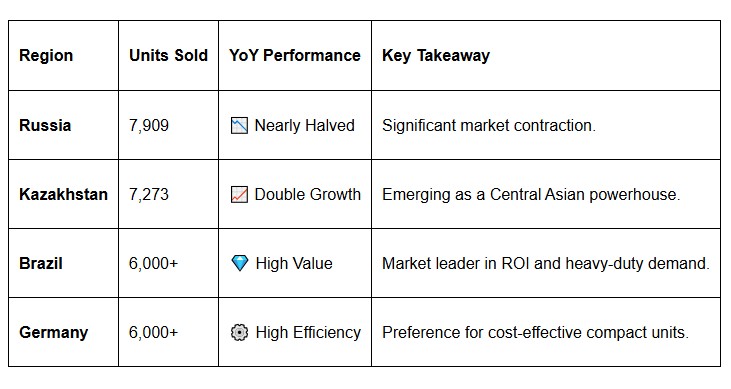
Why did Brazil generate nearly double the export value of Germany, despite importing similar quantities? The answer lies in the Luyu Heavy Industry model.

The Brazilian Advantage

Luyu has moved beyond simple "shipping" to "Global Serving" by establishing:

  • Local Warehouses: Immediate availability of stock.

  • Showrooms: Allowing customers to perform factory-standard inspections on-site.

  • After-Sales Hubs: Providing 24/7 spare parts and technical support.

"Luyu's physical presence in Brazil has bridged the trust gap," notes a regional trade expert. By allowing customers to 'touch and feel' the equipment before purchase, Luyu has successfully pushed higher-tonnage, high-value models into the mining and agricultural sectors.


4. Geopolitical Reordering: Winners and Losers

source


5. Top Revenue Contributors (Million USD)

The top 20 nations accounted for $2.3 Billion (59.1%) of total export value.

  • RU Russia: $270M

  • US USA: $260M

  • BR Brazil: >$150M

  • KZ Kazakhstan: >$120M

  • Others: UAE, Saudi Arabia, Australia, and Indonesia all crossed the $100M threshold.


6. Future Outlook: Beyond the Machine

As we move into 2026, the success of players like Luyu Heavy Industry proves that localization is the new globalization. For Chinese loader brands, the next frontier isn't just about manufacturing—it's about building local ecosystems, warehouses, and trust.


Friday, January 23, 2026

Balancing Economic Benefits and Environmental Protection: The Sustainable Development Path of a Tanzanian Gold Mine Project

In the global wave of mining transformation towards "green, low-carbon, and sustainable development," mining projects no longer solely pursue economic benefits but also consider ecological protection and social responsibility, achieving synergistic development among the three. The 1200 tons/day gold processing plant in Tanzania, as a benchmark project for green mining in the region, achieves high recovery rates through the use of a full-sludge cyanidation process while effectively controlling pollutant emissions and promoting resource recycling through a series of environmental protection technologies and management measures, thus forging a sustainable mining development path suitable for local African conditions.


The safe management of cyanide is the core of environmental protection work in the full-sludge cyanidation process. This project addresses the highly toxic nature of cyanide by establishing a comprehensive safety management system: At the process level, the pH of the slurry is precisely adjusted to above 10.5 to suppress the generation of toxic gases from cyanide hydrolysis. Simultaneously, a highly efficient cyanide recovery system is employed to recycle unreacted cyanide, reducing cyanide consumption by over 30%. At the wastewater treatment level, a cyanide-crushing treatment workshop has been constructed, using bleaching powder oxidation to deeply treat cyanide-containing wastewater. The treated wastewater has a cyanide concentration below 0.5 mg/L, meeting local environmental emission standards and allowing it to be recycled for grinding, leaching, and other processes. This increases the water resource reuse rate to over 85%, effectively alleviating Tanzania's water shortage problem.


The compliant disposal and comprehensive utilization of tailings are another crucial aspect of the project's sustainable development. This project employs a "concentration-filtration-dry stacking" tailings treatment process. A high-efficiency filter press reduces the moisture content of the tailings to below 20%, forming a dry stack filter cake. This not only reduces the land area occupied by the tailings dam but also lowers the risk of soil and groundwater pollution from tailings leakage. Simultaneously, the project team conducted a systematic property analysis of the tailings, discovering that in addition to trace amounts of gold, the tailings also contain certain amounts of valuable elements such as sulfur and iron, possessing comprehensive recovery value. Based on this, the project has reserved interfaces for tailings reprocessing, allowing for the future recovery of valuable elements through bioleaching technology, turning waste into treasure and improving resource utilization. Furthermore, the project is also carrying out vegetation restoration work around the tailings dam, planting local native plants to reduce soil erosion and gradually achieve mine ecological restoration.


Optimizing energy consumption is a crucial measure in the project's green transformation. In the grinding and classification stage, a centrally aerated riser mixing system is used, reducing power consumption by 70% compared to traditional mechanical mixing tanks. In crushing and screening stages, high-efficiency energy-saving equipment is selected, resulting in an overall unit energy consumption reduction of 18% compared to similar gold mine concentrators. Meanwhile, the project fully utilizes Tanzania's abundant solar energy resources, planning and constructing a distributed photovoltaic power generation system. Once operational, this system will meet over 15% of the project's electricity needs, further reducing fossil fuel consumption and carbon emissions.


Sustainable development is not only reflected in the application of environmental protection technologies but also in harmonious coexistence with the local community. During construction and operation, the project prioritizes employing local staff, providing them with professional skills training and stable salaries and benefits, thus boosting local employment. Simultaneously, it invests in improving infrastructure in surrounding communities, constructing roads and water supply facilities, enhancing the quality of life for local residents. Furthermore, the project strictly adheres to Tanzanian mining regulations and environmental policies, regularly conducting environmental monitoring and public disclosure, and proactively accepting supervision from the local government and community, establishing a responsible mining company image.


The experience of the 1200 tons/day gold mine beneficiation plant in Tanzania demonstrates that mining projects can achieve a balance of economic, ecological, and social benefits through process optimization, the application of environmental technologies, and community collaboration. Against the backdrop of the global green mining transformation, this project's sustainable development experience provides valuable lessons for similar gold mining projects in Africa and globally, driving the mining industry towards greater efficiency, environmental friendliness, and social responsibility.

EPC+M+O Model Empowers African Mining: A Successful Paradigm of the Tanzania Gold Mine Project

Amidst the rapid development of the African mining market, innovative project delivery models have become a crucial indicator of a company's core competitiveness. The 1200-ton/day gold concentrator in Tanzania adopted an EPC+M+O (Engineering, Design, Procurement, Construction + Operation Management + Production Maintenance) full lifecycle service model. Leveraging its integrated service capabilities, the project achieved efficient progress from planning to implementation, ensuring not only the successful implementation of processes and achieving production targets but also reducing operational risks for the mine owner. This serves as a successful example of the EPC+M+O model's application in African mining.


Traditional mining projects often employ segmented contracting models, with design, construction, and operation handled by different entities. This can easily lead to problems such as a disconnect between process design and actual operation, insufficient equipment compatibility, and delayed operation and maintenance response, severely impacting project progress and production capacity. The EPC+M+O model, by integrating resources across the entire industry chain, achieves seamless integration of "design-construction-operation," with a single entity responsible for the entire project, fundamentally solving the pain points of segmented contracting. In the Tanzania gold mine project, the service team started with preliminary geological exploration and ore analysis, tailoring a complete cyanidation process solution based on local resource conditions and environmental requirements. They then independently procured suitable equipment, carried out on-site construction and installation, commissioning and optimization, and ultimately took responsibility for long-term operation and management, forming a "one-stop" service loop.


During project implementation, the value of the EPC+M+O model was fully demonstrated in multiple dimensions. In terms of cost control, the service team effectively reduced equipment investment and construction costs by optimizing process design and centrally procuring equipment. Simultaneously, through refined operation and management, they optimized reagent consumption and reduced electricity and labor costs, resulting in a unit processing cost reduction of over 15% compared to similar segmented contracting projects. Regarding schedule control, the coordinated advancement of design and construction avoided delays caused by design changes. The project reached its target production level in just ten months from start-up, 20% shorter than the industry average, creating conditions for the mine owner to quickly achieve profitability. In terms of risk management, the service team, leveraging its extensive experience in African projects, proactively anticipates risks related to local policies and regulations, supply chains, and labor, developing targeted response plans to ensure the project's stable progress in complex environments.


Operations management and maintenance services, as a core component of the EPC+M+O model, directly determine the project's long-term profitability. In the Tanzania gold mine project, the service team established an intelligent operations monitoring system to monitor and dynamically adjust key parameters in each stage, including crushing, grinding, leaching, and desorption/electrolysis, ensuring that core indicators such as leaching rate and recovery rate remain stable at high levels. Simultaneously, a professional operations and maintenance team was assembled to regularly inspect and maintain equipment, promptly addressing equipment malfunctions, maintaining an equipment uptime rate above 95%, far exceeding the industry average. Furthermore, the service team provided professional skills training to local employees, addressing the project's manpower needs while cultivating mining technical talent for the local community, achieving a win-win situation for both the project and the local community.


With the increasing demand for efficient, stable, and environmentally friendly projects in the African mining industry, the EPC+M+O model is becoming the mainstream trend in the industry. The success of the 1200-ton/day gold processing plant in Tanzania demonstrates the unique advantages of this model in resource integration, efficiency optimization, and risk management, providing a referable cooperation paradigm for more mining companies entering the African market. In the future, with the integration of intelligent and green technologies, the EPC+M+O model will be further upgraded, injecting new momentum into the high-quality development of the African mining industry.

From Crushing to Tailings: A Comprehensive Analysis of the 1200t/d Gold Mine Beneficiation Plant in Tanzania

An efficient gold mine beneficiation plant is not an isolated application of a single process, but rather a synergistic optimization of the entire process from raw ore processing to tailings disposal. The 1200t/d gold mine beneficiation plant in Tanzania uses "crushing-grinding-classification-separation-tailings treatment" as its core workflow. Through precise design and equipment adaptation at each stage, it has built a stable, efficient, and environmentally friendly production system, ultimately achieving maximum gold resource recovery and compliant waste disposal. As an EPC+M+O project, its full-process design fully embodies the core concept of "system optimization, cost reduction and efficiency improvement," providing a replicable end-to-end solution for similar projects.


The crushing stage, as the first hurdle in the beneficiation process, directly affects the processing efficiency and cost of subsequent processes. This project adopts a single-stage open-circuit crushing process. Targeting the characteristics of Tanzanian ore—high hardness and low impurity content—the crusher parameters were optimized to crush the raw ore to a qualified particle size of ≤15mm, allowing it to enter the grinding stage without secondary crushing. The selection of open-circuit crushing technology ensures crushing efficiency while reducing equipment investment and floor space, lowering equipment maintenance costs, and is particularly suitable for the large-scale, continuous production needs of this project. Compared with closed-circuit crushing, single-stage open-circuit crushing is more suitable for scenarios with stable ore properties and relatively relaxed requirements for particle size, effectively shortening the production process and improving overall processing efficiency.


The grinding and classification stage is crucial for achieving the individual liberation of gold minerals and gangue minerals, directly determining the subsequent leaching rate. The project adopts a single-stage closed-circuit grinding + hydrocyclone classification process. Through the coordinated operation of ball mills and hydrocyclones, the crushed ore is further ground to a particle size of over 80% -200 mesh, creating optimal conditions for whole-sludge cyanide leaching. The core advantage of closed-circuit grinding lies in the recycling of unqualified mineral particles; that is, the coarse slurry separated by the hydrocyclone is returned to the ball mill for regrinding, ensuring that all mineral particles meet the individual liberation requirements and avoiding a decrease in gold recovery rate due to uneven particle size. Meanwhile, the hydrocyclone's high classification efficiency and large throughput perfectly match the 1200 tons/day production capacity requirement, improving classification accuracy by 20% compared to traditional spiral classifiers, providing a stable slurry feedstock for subsequent leaching processes.


The sorting stage, as the core of gold extraction, employs a full-sludge cyanidation process to achieve efficient gold recovery, the process of which has been detailed in the first article. The tailings treatment stage, crucial for environmental compliance and comprehensive resource utilization, also showcases the project's meticulous design. The tailings are concentrated and dewatered before being stockpiled. Compared to traditional tailings discharge methods, this not only reduces land occupation and water consumption but also improves tailings dryness through high-efficiency filter presses, reducing the risk of leakage during stockpiling. Furthermore, the project team conducted comprehensive property testing on the tailings, discovering that they still contain trace amounts of gold (approximately 0.3-0.5 g/t) and valuable elements such as sulfur and iron, reserving space for subsequent comprehensive tailings recovery. Through a complete tailings treatment process of "concentration-filtration-dry stacking," the project not only meets the requirements of Tanzanian environmental authorities for solid waste disposal but also lays the foundation for resource recycling.


The synergistic optimization of the entire process creates a highly efficient closed loop at each stage. The qualified particle size in the crushing stage reduces energy consumption for grinding and classification; the precise dissociation in grinding and classification improves the leaching rate in the sorting stage; and the efficient recovery in the sorting stage, combined with the environmental compliance of tailings treatment, supports the long-term stable operation of the project. This end-to-end design approach is the core advantage of the EPC+M+O model—breaking down information barriers between stages, achieving full-chain optimization from design to operation, and ultimately achieving multiple goals of capacity, efficiency, and environmental protection.

Breakthrough Path of Whole-Sludge Cyanidation Technology: The Core Secret to High Recovery Rates in Tanzanian Gold Mines

 Against the backdrop of increasingly complex global gold resources and fluctuating grades, efficient gold extraction processes have become the core support for the profitability of mining projects. The 1200 tons/day gold concentrator in Tanzania, a highly representative mining project in the region, has achieved ultra-high leaching rates of 93.75% for sulfide ore and 91.58% for oxide ore through the precise application of whole-sludge cyanidation gold extraction technology, setting a benchmark for similar gold mining projects. This project adopts an EPC+M+O full lifecycle service model, optimizing the entire chain from process design to operational implementation, maximizing the technological advantages of the whole-sludge cyanidation process.


The whole-sludge cyanidation process, also known as carbon leaching (CIL), is a highly efficient gold extraction technology that simultaneously performs leaching and adsorption. Its core logic lies in the full reaction between the cyanide solution and the gold ore slurry, converting gold into soluble complexes, which are then simultaneously adsorbed and recovered using activated carbon, significantly shortening the production cycle and improving the recovery rate. Compared to the traditional carbon-in-pulp (CIP) process, the whole-sludge cyanidation process eliminates the separate operations of cyanide leaching and activated carbon adsorption, integrating the two processes into one. This not only reduces equipment investment and land area but also minimizes gold retention during production, creating conditions for rapid capital recovery. Taking the Tanzanian project as an example, based on a daily processing capacity of 1200 tons of ore and a sulfide ore grade of 10.7 g/t, simply shortening the gold retention period can reduce the mine owner's monthly capital occupation costs by hundreds of thousands of dollars.


The successful application of this process in the Tanzanian project is inseparable from the precise adaptation to the ore characteristics. The project's ore consists of sulfide ore (10.7 g/t) and oxide ore (2.4 g/t), with gold as the only valuable element. The differences in ore properties placed personalized requirements on the process parameters. To achieve efficient leaching of both types of ores, the project team optimized specific process details: In the leaching slurry preparation stage, precise adjustment of the slurry concentration and pH value (maintained above 10.5) ensured both the reaction efficiency of cyanide and gold and reduced ineffective cyanide consumption and environmental risks. Xinhai's specially formulated imported coconut shell activated carbon was selected; its small pore size, high activity, wear resistance, and regenerability increased the adsorption rate by 30%, effectively reducing the cost increase caused by activated carbon loss.


The efficient operation of the whole-sludge cyanidation process also relies on the coordinated operation of core equipment. The project employs a stepped arrangement of high-efficiency cyanidation leaching tanks in the leaching stage. The first two sections are used for slurry pre-cyanidation, while the latter seven sections simultaneously perform cyanidation and countercurrent adsorption with activated carbon, ensuring that gold in the ore is fully dissolved and rapidly captured. The stirring system adopts a centrally aerated riser design, reducing power consumption by 70% compared to traditional mechanical stirring tanks, while simultaneously achieving uniform slurry suspension, reducing activated carbon wear, and further improving gold recovery rate. In the desorption-electrolysis stage, the project employs a high-temperature, high-pressure desorption method. Under conditions of 150℃ and 0.5MPa, 99% of the gold in the gold-loaded carbon can be extracted in just 2-6 hours. After processing by an integrated desorption-electrolysis system, high-purity solid gold is directly obtained, simplifying the subsequent smelting process.


It is worth noting that the highly toxic nature of cyanide has previously sparked controversy within the industry regarding this process. However, through scientific safety management and environmental protection measures, harmless production can be achieved. The Tanzania project, by maintaining an alkaline environment (pH≥10.5) throughout the process and implementing a comprehensive cyanide recovery and destruction system, minimized the risk of cyanide leakage and its impact on the surrounding environment. This approach complies with local environmental regulations and achieves a balance between economic and ecological benefits. Today, the experience gained from the project's full-sludge cyanidation process has become an important reference for medium- to high-grade gold mining projects in Africa, providing a feasible path for more mines to overcome gold extraction efficiency bottlenecks.

Friday, January 16, 2026

A Deep Dive into Lithium Ore Flotation Reagents: How Chemistry Drives Efficient Lithium Extraction

 In the complex world of lithium mining and processing, the difference between a profitable operation and a costly one often comes down to chemistry—specifically, the selection and use of flotation reagents. Lithium ore flotation relies on the ability of these chemical compounds to selectively modify the surface properties of minerals, enabling the separation of valuable lithium-bearing minerals from gangue. While the basic flotation process (grinding, conditioning, flotation, dewatering) is consistent across most operations, the reagent suite is tailored to the unique characteristics of each ore deposit, making it a critical area of focus for mining engineers and process chemists.

To understand the role of reagents in lithium ore flotation, it is first necessary to grasp the surface chemistry of lithium minerals and gangue. Most lithium-bearing minerals, such as spodumene (LiAlSi₂O₆) and lepidolite (K(Li,Al)₃(Al,Si,Rb)₄O₁₀(F,OH)₂), have inherently hydrophilic surfaces, meaning they naturally attract water molecules. Gangue minerals like quartz (SiO₂) and feldspar also have hydrophilic surfaces, which presents a challenge: how to make lithium minerals repel water while leaving gangue minerals unaffected. This is where flotation reagents step in, altering the surface chemistry of minerals to create the necessary hydrophobic-hydrophilic contrast.
Collectors are the workhorses of lithium ore flotation, as they are responsible for rendering lithium minerals hydrophobic. These compounds consist of a hydrophilic head group and a hydrophobic tail group. The hydrophilic head attaches to the surface of lithium minerals through chemical or physical adsorption, while the hydrophobic tail extends into the aqueous slurry, reducing the mineral’s affinity for water. For spodumene, the most common lithium ore, fatty acid collectors (such as oleic acid and linoleic acid) are widely used. These collectors form complexes with lithium ions on the spodumene surface, creating a hydrophobic layer that enables attachment to air bubbles.
Lepidolite, another major lithium ore, requires a different approach due to its aluminosilicate structure. Amine-based collectors, such as dodecylamine, are often preferred for lepidolite flotation, as they interact with the mineral’s surface charges to induce hydrophobicity. The choice of collector is also influenced by ore grade: low-grade ores may require more potent collectors or higher concentrations to achieve acceptable recovery rates, while high-grade ores can often use milder reagents, reducing costs and environmental impact.
Frothers are another essential component of the reagent suite, as they create and stabilize the froth layer in the flotation cell. Without frothers, air bubbles would coalesce and burst, preventing lithium minerals from rising to the surface. Common frothers used in lithium ore flotation include pine oil, methyl isobutyl carbinol (MIBC), and polyglycol ethers. Frothers work by reducing the surface tension of water, allowing smaller, more stable bubbles to form. The selection of a frother depends on the flotation cell design, slurry viscosity, and desired froth properties—for example, pine oil produces a dense, stable froth, while MIBC creates a lighter, more mobile froth.
Modifiers complete the reagent trio, playing a critical role in optimizing selectivity. These compounds adjust the chemical environment of the slurry to enhance the performance of collectors and frothers, while suppressing the flotation of gangue minerals. pH modifiers, such as lime (calcium oxide) and sulfuric acid, are the most commonly used modifiers in lithium ore flotation. As mentioned earlier, spodumene flotation requires an alkaline pH (9–11), which is typically achieved by adding lime. This alkaline environment activates the spodumene surface, improving collector adsorption, while suppressing the flotation of quartz and feldspar.
Other modifiers include depressants, which selectively inhibit the flotation of gangue minerals. For example, sodium silicate is often used to depress quartz in spodumene flotation, as it adsorbs onto the quartz surface and prevents collector attachment. Activators, on the other hand, enhance the flotation of lithium minerals—for instance, calcium ions can activate spodumene flotation by forming complexes with fatty acid collectors, strengthening their attachment to the mineral surface.
The success of lithium ore flotation depends not only on the selection of reagents but also on their dosage and addition sequence. Adding too much collector can lead to non-selective flotation, where gangue minerals are also recovered, reducing concentrate purity. Adding too little collector results in low lithium recovery. The addition sequence is equally important: modifiers are often added first to adjust the slurry environment, followed by collectors, and finally frothers to create the froth layer.
Advancements in reagent technology are continuously improving the efficiency and sustainability of lithium ore flotation. Eco-friendly reagents, such as plant-based collectors and biodegradable frothers, are gaining traction as the industry seeks to reduce its environmental impact. Additionally, custom reagent blends—tailored to specific ore characteristics—are becoming more common, enabling mining companies to optimize flotation performance for their unique deposits.
To learn more about the role of reagents in lithium ore flotation, as well as detailed process steps and optimization strategies, explore this comprehensive resource: [https://www.fewstern.org/news/the-general-process-of-lithium-ore-flotation_464.html]
In summary, flotation reagents are the unsung heroes of lithium extraction, turning raw ore into high-purity concentrates through precise chemical interactions. As the demand for lithium grows, the development and optimization of reagent systems will remain a key area of innovation, driving efficiency, sustainability, and profitability in the lithium mining industry.