The global shift toward clean energy has positioned lithium as a cornerstone resource, often dubbed “white gold” for its irreplaceable role in lithium-ion batteries. These batteries power everything from electric vehicles (EVs) and portable electronics to large-scale renewable energy storage systems—technologies that are pivotal in reducing carbon emissions and mitigating climate change. But behind every high-performance lithium-ion battery lies a sophisticated mining and processing chain, and lithium ore flotation stands out as one of the most vital steps in unlocking the full value of lithium ore deposits.
Friday, January 16, 2026
The Critical Role of Lithium Ore Flotation in Powering the Global Clean Energy Transition
Wednesday, December 31, 2025
Industrial Applications and Environmental Considerations in Copper Extraction
Copper extraction is not only a metallurgical process but also a critical industrial activity with economic and environmental implications. Understanding these factors is essential for sustainable copper production.
Copper Demand and Industrial Significance
Copper’s role in power generation, transmission, and electronics makes it a cornerstone of modern infrastructure. The global shift toward electrification has further increased demand for high-purity copper.
Environmental Challenges in Copper Extraction
Mining and processing activities generate waste rock, tailings, and emissions. Responsible management of these by-products is crucial to minimizing environmental impact.
Cleaner Production and Waste Management
Modern copper operations implement water recycling systems, tailings dams, and emission controls. Smelting off-gases are treated to recover sulfur and reduce air pollution.
Recycling and Circular Economy
Copper is highly recyclable without loss of quality. Recycling copper scrap reduces energy consumption and environmental impact, supporting a circular economy.
Conclusion
The copper extraction process is a sophisticated integration of mining, mineral processing, and metallurgy. Through continuous technological improvement and responsible environmental management, the industry continues to meet global copper demand while advancing sustainability goals.
Key Stages and Equipment Used in the Copper Extraction Process
Copper extraction is a capital-intensive and technology-driven process that depends on the effective integration of multiple stages and specialized equipment. From initial mining to final refining, each stage contributes to the overall efficiency and quality of copper production.
Mining Equipment and Blasting Techniques
Mining operations employ drilling rigs, explosives, and heavy machinery to fragment and extract ore. Advances in blasting design and automation have improved safety, productivity, and ore recovery.
Crushing and Milling Equipment
Primary crushers reduce ore size, while secondary and tertiary crushers further prepare the material for grinding. Ball mills and rod mills are widely used to achieve fine particle sizes required for flotation.
Flotation Cells and Separation Systems
Flotation cells are designed to maximize contact between air bubbles and copper minerals. Modern flotation systems use automated controls and real-time monitoring to optimize recovery and concentrate grade.
Smelters, Converters, and Refining Cells
Smelting furnaces, converters, and electrorefining cells form the core of metallurgical processing. Precise temperature control and chemical management are essential to produce high-quality copper efficiently.
Electroplating and Downstream Applications
Refined copper is widely used in electroplating to coat other metals, improving corrosion resistance and conductivity. Copper also serves as a base material for alloys such as brass and bronze.
Future Trends in Copper Processing
Emerging technologies, including digital process control and low-carbon smelting, are shaping the future of copper extraction. These innovations aim to improve efficiency, reduce emissions, and support the growing demand for copper in renewable energy and electric vehicles.
From Rock to Metal—A Detailed Look at Copper Ore Processing Technologies
The transformation of copper ore into refined metal is a sophisticated process that integrates mining engineering, mineral processing, and metallurgy. Each stage of the copper extraction process is designed to maximize metal recovery while minimizing environmental impact and operational costs.
Ore Mining and Material Handling
Copper mining begins with extensive geological exploration to identify economically viable ore deposits. Once a deposit is confirmed, mining operations extract the ore through drilling, blasting, and hauling. Efficient material handling systems ensure a steady supply of ore to the processing plant.
Size Reduction and Mineral Liberation
Crushing and grinding are collectively referred to as comminution. These stages account for a significant portion of energy consumption in copper processing plants. Advanced equipment and optimized grinding circuits are used to achieve the desired particle size while minimizing energy use.
Proper mineral liberation is essential for efficient flotation. Overgrinding can produce excessive fines that reduce flotation efficiency, while undergrinding leaves copper minerals locked within gangue.
Flotation Chemistry and Process Control
Flotation relies on precise control of chemical reagents and operating conditions. Collectors such as xanthates are commonly used to enhance the hydrophobicity of copper minerals. Frothers stabilize air bubbles, and modifiers adjust pH and depress unwanted minerals.
Smelting Operations and Thermal Processing
Smelting converts copper concentrate into molten metal through high-temperature processing. Modern smelters use technologies such as flash smelting and bath smelting to improve energy efficiency and reduce emissions. Sulfur dioxide generated during smelting is often captured and converted into sulfuric acid for industrial use.
Electrorefining and Product Quality
Electrorefining ensures the production of ultra-high-purity copper suitable for electrical and electronic applications. Impurities such as gold, silver, and selenium are recovered as valuable by-products during refining, enhancing overall economic efficiency.
Sustainability and Technological Advancements
Modern copper extraction emphasizes sustainability through water recycling, tailings management, and emissions control. Continuous innovation is improving recovery rates while reducing the environmental footprint of copper production.
Comprehensive Overview of the Copper Extraction Process from Ore to Refined Metal
Copper is one of the most widely used industrial metals in the world, playing a critical role in electrical engineering, construction, transportation, and renewable energy systems. The copper extraction process is a complex, multi-stage operation designed to efficiently separate copper from its host ore and refine it to the purity levels required for industrial and commercial applications. Understanding this process provides valuable insight into modern mineral processing and metallurgical technology.
Mining and Blasting: Accessing Copper Ore Resources
The copper extraction journey begins with mining, which can be carried out through open-pit mining or underground mining depending on the depth and geometry of the ore body. Open-pit mining is commonly used for large, near-surface deposits, while underground mining is employed for deeper, high-grade ores.
Once the ore body is exposed, drilling and blasting are used to fragment the rock into manageable sizes. Controlled blasting techniques are essential to minimize ore dilution and ensure worker safety. The blasted ore is then transported to the processing plant using haul trucks, conveyors, or rail systems.
Crushing and Grinding: Preparing Ore for Liberation
After mining, the copper ore undergoes crushing, where large rock fragments are reduced in size using jaw crushers, cone crushers, or gyratory crushers. The primary goal of crushing is to prepare the ore for the grinding stage by reducing it to a size suitable for milling.
Grinding follows crushing and is typically performed in ball mills or rod mills. During grinding, the ore is mixed with water to form a slurry, and mechanical energy is applied to break the ore down into fine particles. This step is crucial because it liberates copper minerals from the surrounding gangue material, enabling effective separation during flotation.
Flotation: Concentrating Copper Minerals
Flotation is the most widely used method for concentrating copper sulfide ores. In this process, the ground ore slurry is mixed with chemical reagents such as collectors, frothers, and modifiers. Collectors selectively bind to copper minerals, while frothers help generate stable bubbles.
When air is introduced into the flotation cell, bubbles attach to the copper-bearing particles, causing them to rise to the surface as froth. This froth is skimmed off and collected as copper concentrate, while the remaining waste material, known as tailings, is discarded or further processed.
Smelting and Refining: Producing High-Purity Copper
The copper concentrate obtained from flotation typically contains 20–35% copper and must be further processed through smelting. During smelting, the concentrate is heated in a furnace, causing chemical reactions that separate copper from iron, sulfur, and other impurities. The result is molten matte, which undergoes converting to produce blister copper with a purity of around 98–99%.
Refining is the final step, often carried out through electrorefining. In this process, blister copper acts as the anode, and pure copper sheets serve as the cathode. An electric current causes copper ions to migrate and deposit onto the cathode, producing copper with a purity of up to 99.99%.
Applications and Industrial Importance
Refined copper is used in electrical wiring, electronics, plumbing, alloys, and electroplating. Its excellent electrical conductivity, corrosion resistance, and recyclability make copper an indispensable material in modern society.
Thursday, December 25, 2025
From “Made in China” to Global Partner: The Three Core Strengths of China’s Construction Machinery Industry
China's construction machinery industry is undergoing a profound phase of global transformation. Today, Chinese construction equipment is no longer defined solely by cost advantages. According to the 2025 Global Top 50 Construction Machinery Manufacturers ranking, 13 Chinese companies made the list, with overseas sales accounting for an average of nearly 41.94% of their total revenue. For some manufacturers, international markets now contribute more than 70% of overall sales.

Between 2020 and 2024, China's construction machinery exports surged from USD 21 billion to USD 52.86 billion. This remarkable growth reflects a renewed global recognition of Chinese brands—not only in terms of manufacturing capacity, but also in technology, reliability, and service capability. China's international expansion has moved beyond the early stage of simply“going global” and entered a new phase of deeper market integration.
Compact Loaders as a Global Growth Engine
Within the construction machinery export segment, wheel loaders stand out for their strong international performance. From January to August 2025, China exported 38,264 loaders, representing a year-on-year increase of 5.3%. Among them, compact models—such as skid steer loaders and machines under three tons—have emerged as key drivers of global growth.
Thanks to their flexible positioning and broad application scenarios, these compact machines are gaining traction worldwide. As overseas infrastructure development shifts toward more refined, efficiency-driven construction models, smaller equipment with high versatility and fast innovation cycles is increasingly favored. These“small-footprint” machines are not only delivering strong sales growth, but are also helping reshape the global perception of“Intelligent Manufacturing from China.”

Scenario-Driven Design for Diverse Global Conditions
One of the defining advantages of Chinese compact construction machinery lies in its ability to respond effectively to highly diverse operating environments. Chinese manufacturers understand that truly global equipment cannot rely on a one-size-fits-all approach.
From extreme cold in Northern Europe to intense heat in the Middle East, from high-altitude, low-oxygen regions to coastal areas with high salinity, operating conditions place very different demands on equipment configuration, durability, and after-sales support.
Backed by the world's most complete construction machinery supply chain, Chinese manufacturers have developed strong scenario-based customization capabilities. This flexibility is rooted in China's vast domestic market, which serves as a real-world testing ground. Complex geography and large-scale infrastructure projects at home have forced manufacturers to design machines capable of handling a wide range of challenges—experience that now translates directly into value for global customers.

Electrification as a Strategic Advantage
Electrification represents another area where Chinese construction machinery is gaining a competitive edge. Electric and hybrid equipment from Chinese manufacturers is winning international recognition through a combination of technological maturity, full-chain cost control, and deep customization capability.
Supported by a highly integrated industrial ecosystem, Chinese electric machines achieve both scale production and lower energy consumption. Simplified structures and efficient power usage result in lower total cost of ownership and more attractive returns on investment for end users.
At the same time, Chinese manufacturers are well positioned to meet the stringent environmental and customization requirements of European and North American markets, while also addressing the practical efficiency demands of emerging markets. This ability to deliver tailored, high-end solutions has become a key differentiator on the global stage.
Deep Localization and Long-Term Partnership
Today, Chinese construction machinery companies are moving beyond pure product exports, aiming instead to become localized enterprises and long-term value partners within their target markets.
True localization goes far beyond setting up assembly plants or warehouses. It involves a deeper transformation: shifting from centralized decision-making to empowering local teams, and evolving customer relationships from transactional interactions into partnerships built on trust and shared value.
This commitment is reflected in concrete actions. Chinese manufacturers are actively building comprehensive overseas ecosystems that integrate sales, service, spare parts supply, technical support, and even financial solutions. For some companies, overseas business now contributes more than half of total revenue.
China's construction machinery industry has clearly entered a deeper phase of global engagement. With a solid manufacturing foundation, strong innovation momentum, and a firm commitment to globalization, Chinese brands are well positioned to play a more influential role in the global construction machinery market. Looking ahead, the industry is expected to move beyond traditional export-driven thinking and transition toward a new stage centered on localized operations and scenario-based value creation.
LUYU Machinery: A Specialist in Compact Loaders
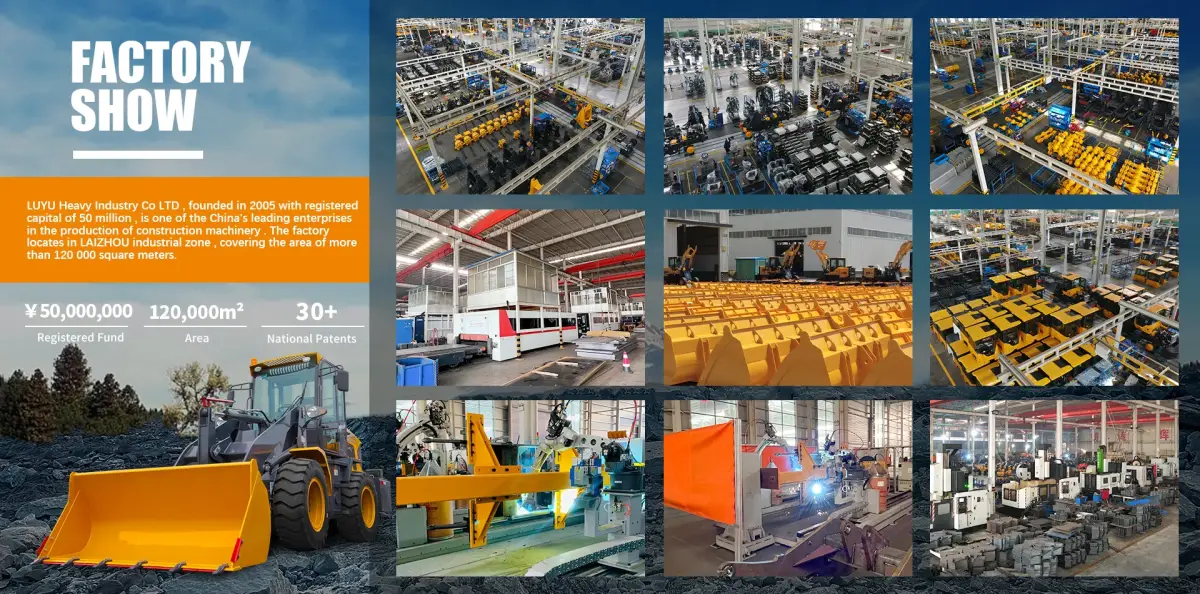
Amid this wave of Chinese construction machinery expanding overseas, LUYU Machinery stands out as a professional manufacturer with years of experience in the compact loader segment. Specializing in the development and production of skid steer loaders and small wheel loaders, LUYU focuses on delivering flexible, efficient, and reliable compact equipment.
Committed to product quality and responsive service, LUYU Machinery continues to support global customers—especially owners of small and medium-scale construction projects—by providing practical solutions tailored to real-world operating needs.

Thermal Shock Purification—Why Water Quenching Matters in Quartz Sand Processing
Quartz purification technology continues to evolve as high-end applications demand increasingly stringent purity standards. Traditional physical beneficiation methods, such as magnetic separation and flotation, are effective for removing external mineral impurities but struggle to address lattice-bound and inclusion-related contaminants. In this context, the water-quenched quartz sand process has emerged as a valuable thermal shock purification method.
Understanding Thermal Shock in Quartz Materials
Thermal shock occurs when a material experiences a rapid temperature change, leading to internal stress caused by uneven thermal expansion or contraction. Quartz, despite its chemical stability, is sensitive to thermal shock due to its crystalline structure and anisotropic expansion behavior.
When quartz sand heated to over 1000 °C is suddenly immersed in water, the outer layer cools rapidly while the interior remains hot. This temperature gradient generates tensile stress that exceeds the mechanical strength of the quartz crystal, resulting in microfractures and structural loosening.
Process Flow and Technical Highlights
The water-quenched quartz sand process typically includes raw material preparation, high-temperature heating, water quenching, cooling, separation, and recycling. Each stage contributes to impurity liberation and structural modification.
During heating, alkali metals and trace metal impurities gain mobility. During quenching, these impurities are physically exposed or mechanically separated from the quartz matrix. This combination of thermal activation and mechanical stress makes water quenching uniquely effective.
Synergy with Chemical Purification Methods
One of the most significant advantages of water quenching is its compatibility with chemical deep purification processes. After quenching, the increased surface area and microcrack network allow acids or chlorinating agents to penetrate quartz particles more easily. This improves the removal efficiency of impurities such as K, Na, Al, Fe, and Ti.
As a result, water-quenched quartz sand often requires lower reagent concentrations, shorter reaction times, and lower energy input during chemical treatment, leading to cost savings and environmental benefits.
Industrial Significance
In industrial practice, water quenching is particularly suitable for high-grade vein quartz, pegmatite quartz, and quartz ores used in optical and electronic-grade applications. Its ability to enhance overall purification efficiency makes it an important pretreatment step in advanced quartz beneficiation plants.
With increasing emphasis on sustainable and efficient mineral processing, thermal shock purification methods such as water quenching are expected to gain wider adoption.
-
Gold heap leaching has evolved into one of the most efficient, flexible, and environmentally adaptive methods of gold extraction. Since its ...
-
Mini-excavators with CE (Conformité Européenne) certification and Euro V emission standards are typically designed to meet the safet...
-
High-purity quartz (HPQ) is a crucial material in various high-tech industries, including electronics, optics, and photovoltaics. The purifi...