Thursday, December 11, 2025

Magnetization Roasting–Weak Magnetic Separation: The Key to High-Grade Siderite Concentrates

 Magnetization roasting followed by weak magnetic separation is regarded as one of the most effective methods for upgrading refractory siderite ores. During roasting, siderite decomposes into magnetite, enhancing its magnetic properties. This transformation fundamentally changes the ore’s beneficiation behavior.

The roasting process typically involves heating siderite in a reducing atmosphere. As carbon dioxide is released, iron carbonate transforms into magnetite. The magnetic contrast between transformed magnetite and gangue minerals enables efficient weak magnetic separation.

Weak magnetic separators can then recover magnetite with high efficiency, producing iron concentrates with significantly improved grade and recovery rates.

This method is especially suitable for finely intergrown or complex siderite ores that do not respond well to flotation or gravity separation.

In many beneficiation plants, magnetization roasting is integrated with grinding, classification, and staged magnetic separation to maximize performance.

While the energy cost of roasting is considerable, the dramatic improvement in concentrate quality often justifies the investment. As global iron ore resources decline in quality, magnetization roasting continues to gain prominence as a key technology for siderite beneficiation.

Magnetic Separation Strategies for Siderite Upgrading

 Siderite’s weak magnetic properties make it amenable to strong magnetic separation technologies. This beneficiation method is especially effective when dealing with ores that contain multiple iron minerals, some of which may possess stronger magnetic properties. Magnetic separation also pairs well with magnetization roasting, enabling further upgrading.

Strong magnetic separation employs high-intensity magnetic fields to attract siderite particles while rejecting nonmagnetic gangue. Wet high-intensity magnetic separators (WHIMS) are the primary equipment used for this purpose. These machines provide adjustable magnetic intensity, allowing operators to fine-tune separation performance.

In many operations, beneficiation begins with weak magnetic separation to remove strongly magnetic minerals such as magnetite or hematite. This reduces gangue content and enhances the efficiency of subsequent strong magnetic separation.

Magnetic separation is influenced by ore grade, particle size, and roasting behavior. Pre-roasting siderite can significantly improve its magnetic response. Therefore, magnetic separation often forms part of a staged, optimized beneficiation strategy.

Gravity Separation for Siderite: Principles, Equipment, and Optimization

 Gravity separation remains one of the oldest yet most widely applied beneficiation techniques for siderite. Known for its simplicity, cost-effectiveness, and environmental friendliness, gravity separation is particularly suitable for coarse to medium-grained siderite ores. Although the recovery rate may be lower compared with flotation or magnetic separation, gravity methods play a crucial role in preliminary beneficiation and high-volume processing.

Two major gravity separation techniques are commonly used for siderite: heavy-media separation and jigging separation. Heavy-media separation uses a dense suspension (typically magnetite or ferrosilicon) to separate minerals based on density differences. Since siderite has a relatively high density compared with most gangue minerals, it sinks in the suspension while lighter gangue materials float.


Jigging separation exploits pulsating water flow to stratify minerals based on density and particle size. Siderite, being denser, settles into the lower layers, enabling effective separation. Jig concentrators are widely used due to their high processing capacity and low energy consumption.

The efficiency of gravity separation depends on particle size distribution, equipment calibration, and ore preparation. Proper classification ensures that particles of similar size enter the same separation stage. Additionally, desliming helps prevent fine particles from disrupting separation efficiency.

While gravity separation alone may not achieve high-grade concentrates, it remains invaluable as a pre-processing step before flotation or magnetic separation. Its low operational cost and environmental profile make it a preferred option in many beneficiation plants.

Sunday, December 7, 2025

How do you choose the right small diesel forklift for your factory or warehouse?

 How do you choose the right small diesel forklift for your factory or warehouse?

Many warehouse managers and factory owners ask this question when selecting forklifts for efficient material handling. With LUYU forklifts, you can find small-ton diesel models designed specifically for factory and warehouse use, offering durability, reliability, and smooth operation.

叉车展示1

1. What lifting capacity do you actually need?

LUYU small-ton diesel forklifts, typically ranging from 1.5 to 2.5 tons, are ideal for handling pallets, raw materials, and finished goods in warehouses and factories. Choosing the right LUYU forklift ensures safe operations and avoids unnecessary overspending on over-spec machines.

2. How important is engine performance and fuel efficiency?

LUYU forklifts come equipped with reliable engines that provide consistent torque, lower fuel consumption, and quick response. This enhances warehouse efficiency, reduces operating costs, and allows your team to complete more tasks per day.

3. Does maneuverability matter in your workspace?

In factories with narrow aisles, LUYU small-ton diesel forkliftsoffer a compact design, optimized turning radius, and excellent visibility. Operators can move safely and efficiently even in tight spaces, improving productivity and reducing fatigue.

4. What about durability and long-term maintenance?

LUYU forklifts are built for heavy-duty use with:

  • Reinforced chassis and mast

  • High-quality hydraulic components

  • Stable braking system

  • Easy-access maintenance points

This ensures long-term reliability, minimal downtime, and maximum return on investment for your warehouse operations.

5. How do attachments improve your work efficiency?

LUYU forklifts support a variety of attachments, including side shifters, fork positioners, clamps, and extensions. These attachments allow LUYU small-ton diesel forklifts to handle multiple tasks efficiently, reducing the need for multiple machines.

6. Why choose LUYU forklifts for your warehouse?

LUYU forklifts are trusted worldwide for:

  • High lifting performance with low fuel consumption

  • Compact and stable design for narrow warehouse aisles

  • Reinforced components for extended machine life

  • Smooth hydraulic control for precise operations

  • Flexible attachments to meet diverse material-handling needs

When you select a LUYU forklift, you're choosing a reliable, durable, and efficient solution for your factory or warehouse.

Maximize your warehouse efficiency with LUYU small-ton diesel forklifts — every lift counts.

How to Choose the Right Log Loader? Key Factors to Consider


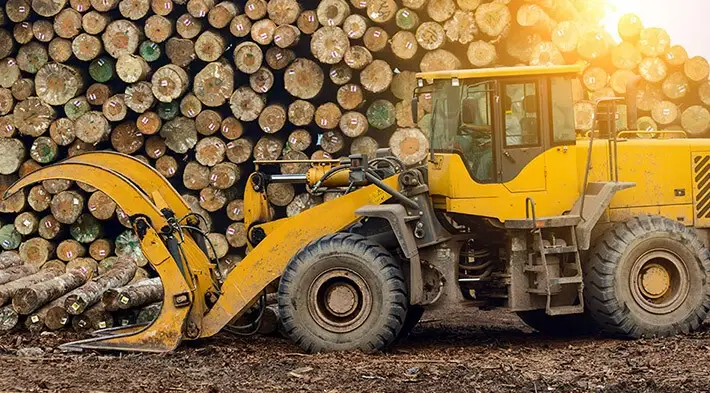
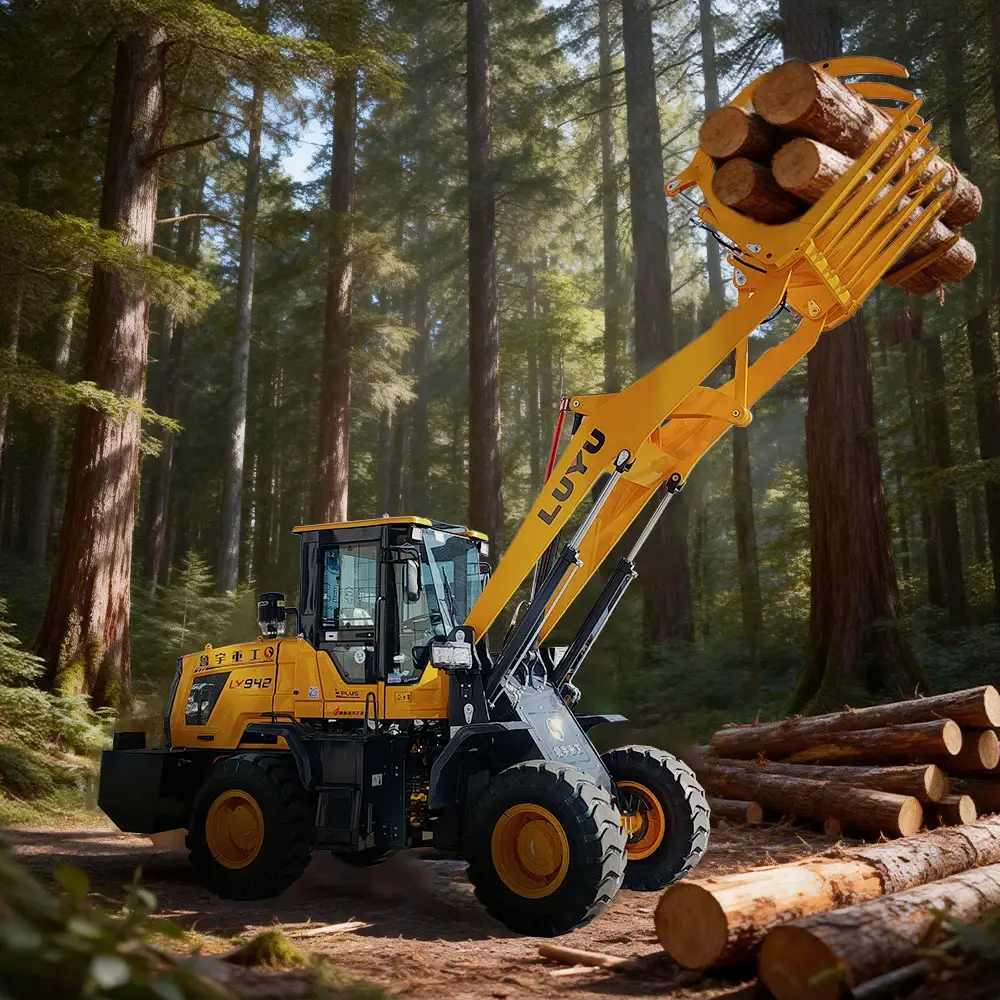
Selecting a log loader is very different from choosing a standard wheel loader. Timber handling involves irregular loads, frequent swings, constant hydraulic operations, and long working hours. That's why the right configuration must match your actual working conditions rather than just looking at general specifications.

Below is a practical, industry-oriented guide—combined with real experience from LUYU's projects in Southeast Asia—to help you evaluate the right machine for log loading.


1. Start With the Grapple: The Core Component for Timber Handling

The grapple determines efficiency more than any other attachment.
✓ Opening Size

A wider opening can handle logs with larger diameter ranges.
This is especially important for regions like Vietnam or Indonesia where log sizes vary significantly.

LUYU usually customizes the opening size based on the customer's timber diameter range to ensure optimal grip and stability.
✓ Structure Type

Dual-arm grapples: Ideal for handling logs with uneven diameters.


Four-petal/multi-petal grapples: Better for branches and irregular wood.


360° Rotating Grapples: Essential for stacking, organizing, and precise placement.
✓ Hydraulic Grip Strength

A strong and stable clamping force ensures safety when swinging or lifting heavy logs.

2. Engine Selection: Consider Both Power and Export Compliance

Power output is crucial, but for overseas buyers, export regulations and after-sales service matter just as much.

Key points:

Meets local emission standards (Euro V, EPA, etc.)


Easy for customs clearance / registration


Availability of parts in the destination country


Fuel efficiency and durability

For example, many Southeast Asian customers choose Quanchai engines on LUYU loaders because they offer stable performance, low fuel consumption, and smooth export documentation.


3. Hydraulic System: Stability Matters in High-Frequency Operations

Timber operations require:

Fast cycles


Repeated gripping


Continuous movement


High hydraulic pressure consistency

Therefore, focus on:

Pump displacement


Precision of the multi-way valve


Dedicated oil lines for grapples


Cylinder size and durability

LUYU often provides thickened hydraulic cylinders to improve resistance to side forces and long-term fatigue—especially useful in log yards.
4. Structural Strength: A Log Loader Must Handle Uneven Loads

Unlike loading bulk materials, timber creates significant side loading and torsion.

Check:

Frame beam thickness


Reinforcement around boom & linkage


Weld quality


Optional wear-resistant plates or reinforced structures

LUYU can reinforce key areas or add wear plates depending on the customer's ground condition and timber size.
5. Match the Configuration to the Working Environment

Different workplaces have very different demands:
Forest / Mountain Areas

Off-road tires


Larger grapple opening


Reinforced frame


Higher torque engines
Sawmills / Timber Yards

Smooth and fast hydraulic response


Optional quick-coupler


Standard industrial tires
Port Operations

Height priority


360° rotating grapple


Wide-view cabin

LUYU typically adjusts tire types, grapple designs, and hydraulic flow based on each customer's actual environment, not a one-size-fits-all solution.
6. Versatility: Can One Machine Handle More Tasks?

To maximize the ROI, a good log loader should support:

Wood grapples


Reinforced buckets


Pallet forks


Quick-coupler systems


Multiple engine options

LUYU's modular design allows customers to combine attachments freely, making one machine capable of handling logs, bulk materials, and general loading tasks.
Conclusion: The Best Log Loader Is the One That Fits Your Work Conditions

When choosing a log loader, the key factors are:

Grapple type


Engine compliance


Hydraulic stability


Frame durability


Working environment


Parts availability


Customization options

LUYU's advantage lies in its ability to custom-build configurations—grapples, buckets, reinforced cylinders, engines, frame upgrades—based on the customer's real timber-handling conditions. This ensures the machine is not just powerful on paper, but truly effective on-site.

Tuesday, December 2, 2025

Modern Copper Mining Technology: Equipment, Automation, and Sustainability

 Copper mining has evolved dramatically due to advancements in equipment, automation, and sustainability practices. This article examines modern mining technologies and how they improve safety, efficiency, and environmental responsibility.

1. Modern Mining Equipment for Copper Extraction

1) Drilling and Blasting

High-precision systems include:

  • GPS-guided blast hole drills

  • Electronic detonators

  • Blast modeling software

These tools optimize fragmentation and reduce energy consumption.

2) Loading Equipment

Common machines:

  • Hydraulic excavators

  • Electric rope shovels

  • Wheel loaders

These machines transport ore to haul trucks or conveyors.

3) Haulage Systems

A major cost factor in open-pit mines. Innovations include:

  • Autonomous haul trucks

  • In-pit crushing and conveying (IPCC)

  • Trolley-assisted haulage

These drastically reduce fuel usage and improve productivity.


2. Automation and Digital Technologies

1) Autonomous Vehicle Fleets

Driverless haul trucks and loaders reduce accidents and operate continuously.

2) AI-Powered Ore Sorting

Sensors detect ore vs. waste, improving mill feed quality and lowering processing costs.

3) Remote-Controlled Equipment

Operators control machinery from safe, climate-controlled centers.

4) Digital Twins

Virtual models of mines allow engineers to simulate and optimize operations.


3. Sustainability in Copper Mining

Water Management

Copper mines implement:

  • Thickened tailings

  • Paste backfill

  • Water recycling systems

  • Dry stacking

Energy Efficiency

Mines increasingly use:

  • Solar power

  • Wind power

  • Electric haulage

  • Hybrid machinery

Environmental Restoration

Land rehabilitation, dust suppression, and biodiversity programs are standard practices.


4. Future Trends

Key future technologies include:

  • AI-driven plant control

  • Low-water processing flowsheets

  • Carbon-neutral mining fleets

  • Battery-electric underground machinery


Conclusion

Modern copper mining combines advanced machinery, data-driven automation, and sustainable practices to increase productivity while protecting the environment. These innovations ensure that copper extraction can meet global demand in a responsible and efficient manner.


From Ore to Market: How Copper Smelting and Refining Work

 Copper smelting and refining transform concentrated copper ore into high-purity metal suitable for industrial applications. This article explores each stage in detail, from furnace operations to electrolyte refining.

1. What Is Copper Smelting?

Smelting is a high-temperature metallurgical process used to extract copper metal from sulfide concentrates. Copper concentrate typically contains:

  • 20–30% Cu

  • Iron sulfides

  • Silica

  • Minor impurities

The goal of smelting is to separate copper from sulfur and iron to produce matte, which contains about 60% copper.


2. Major Steps in Copper Smelting

Step 1: Drying and Roasting

Before smelting, concentrate is filtered and dried to reduce moisture. Some plants use fluidized-bed roasters to partially oxidize sulfides, lowering sulfur content.

Step 2: Smelting Furnace

Copper smelting uses several furnace types:

  • Flash smelter

  • Electric furnace

  • Reverberatory furnace

The concentrate is oxidized at temperatures above 1200°C. Sulfur reacts with oxygen, releasing SO₂ gas, while remaining materials form molten matte and slag.


Step 3: Converting

Matte is transferred to converting furnaces where air or oxygen-enriched air is blown through it.
Chemical reactions:

  • Iron oxidizes first and forms slag

  • Sulfur oxidizes and escapes as gas

  • Final product: blister copper (98–99% Cu)

Blister copper is named for the gas bubbles on its surface after cooling.


3. Copper Refining Methods

1) Fire Refining

Blister copper is refined in an anode furnace to remove oxygen and remaining impurities. This produces anode copper, around 99.6% pure.

2) Electrolytic Refining

Electrolytic refining produces the highest-purity copper (99.99%).
Process:

  • Anode copper slabs dissolve

  • Pure copper plates deposit on cathodes

  • Precious metals collect as anode slime

Electrolytic refining is the dominant global method.


4. Environmental Management in Copper Smelting

Environmental regulations have driven major improvements:

  • SO₂ capture for sulfuric acid production

  • Slag recycling

  • Waste heat recovery

  • Tail gas scrubbing

Modern smelters operate far cleaner and more efficiently than older plants.


5. Final Products and Uses

Refined copper is converted into:

  • Rods

  • Sheets

  • Wire coils

  • Anodes for electroplating

Applications include electrical wiring, electronics, manufacturing, renewable energy infrastructure, and transportation.


Conclusion

Copper smelting and refining remain essential links between raw ore and industrial copper products. Through advanced metallurgy and strict environmental control, modern copper plants achieve high efficiency, low emissions, and exceptional product purity.