Sunday, September 7, 2025

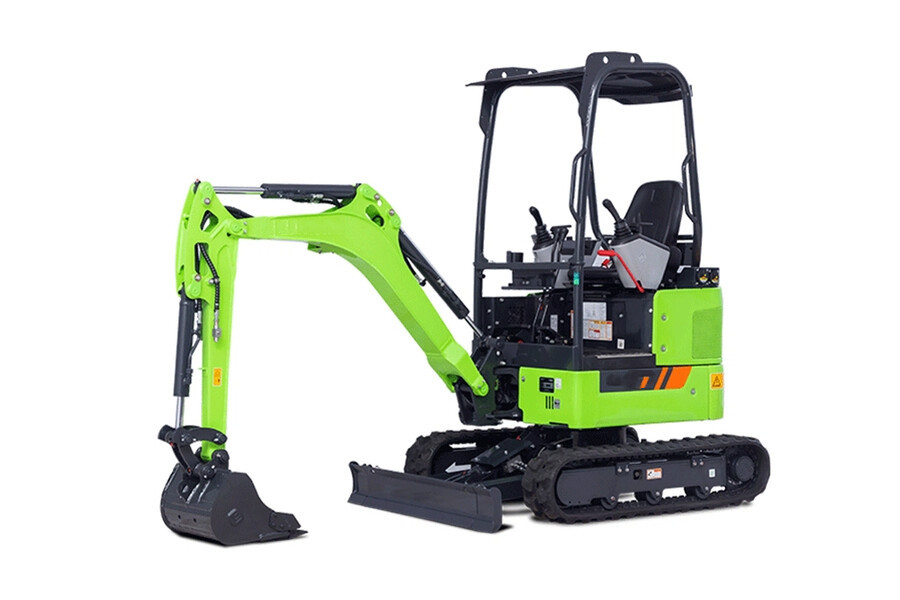
Why not choose an electric excavator?

 Electric loaders continue to rapidly penetrate the industry, highlighting the unusually slow pace of electrification in excavators.With environmental policies becoming increasingly stringent, many regions have banned high-emission equipment from entering. Yet why have electric excavators consistently struggled to gain widespread popularity?

Operational scenarios create inherent disadvantages. Excavator operations are dispersed and often conducted in remote environments where supporting charging infrastructure is virtually nonexistent. While municipal projects benefit from favorable policies, the frequent relocation of equipment makes them highly dependent on external charging stations. Currently, charging station coverage remains low, and field operations frequently face the dilemma of having "no power to charge".
1000w667h1698906657746473.jpg!900x600

High prices present the first barrier. Compared to electric loaders, electric excavators require larger battery capacities, resulting in higher initial prices. Their acquisition costs exceed those of fuel-powered excavators by 30% to 50%. Although operating costs are lower, the payback period still spans 3 to 5 years, deterring most users. Furthermore, battery degradation accelerates under demanding conditions, with replacement costs sometimes exceeding those of a used fuel-powered machine. This significantly reduces the residual value of electric excavators.

Range anxiety remains a significant drawback. Excavators typically operate under prolonged, high-intensity conditions, often running continuously for over 8 hours. Current mainstream electric excavators can only sustain operations for 4 to 6 hours. With battery technology bottlenecks yet to be overcome, working in environments lacking charging infrastructure poses considerable challenges.

LUYU has consistently promoted diesel excavators over electric excavators to clients. This decision reflects our consideration for both our customers and the specific conditions of their work sites. Should you genuinely require an electric excavator, Lu Yu can also accommodate your need.


Luyu Wheel Excavator: Your Hardcore Partner for Cost Reduction and Efficiency Boost

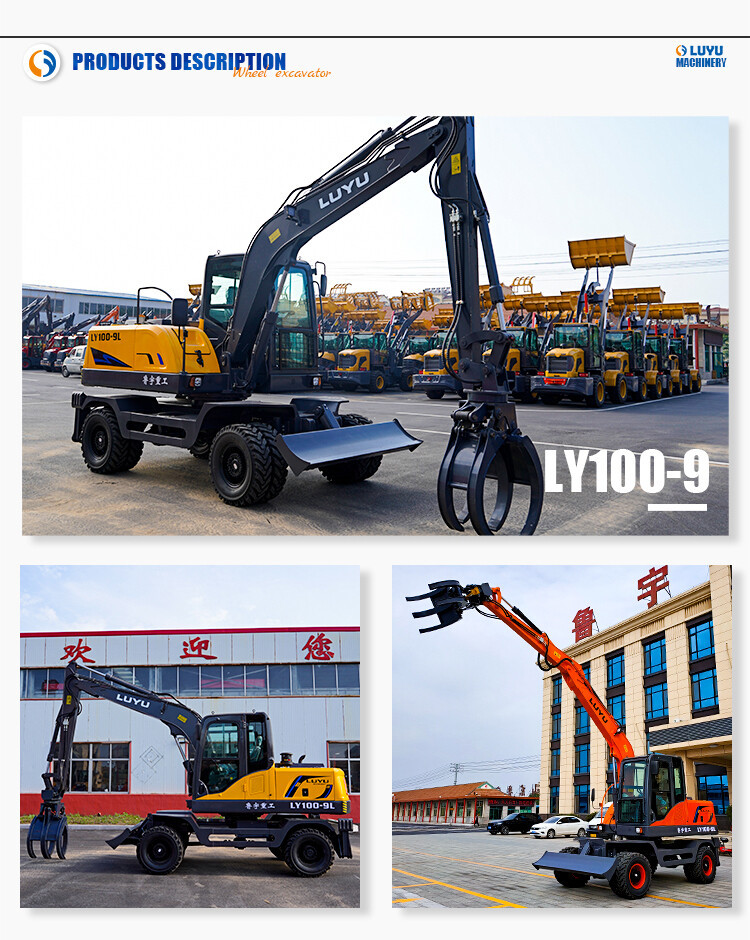
 In municipal emergency repairs, rural infrastructure projects, and logistics park loading and unloading operations, wheel excavators often face challenges such as high fuel consumption, difficult transportation, operator fatigue, and maintenance hassles. These issues can reduce profits and delay project timelines. LUYU wheel excavators have undergone technical upgrades to specifically address these problems. Let's take a closer look.

轮挖产品系列首图


Powerful and fuel-efficient, maximizing your profits

Wheel escavators equipped with a Yuchai electronically controlled engine rated at 66kW, paired with an intelligent control system that automatically lowers the engine speed under light loads and precisely controls fuel injection. When breaking concrete or digging hard soil, allowing direct operation without repeated adjustments.

Official test data show that LUYU excavator fuel consumption is significantly lower than traditional wheel excavators of the same tonnage, saving tens of thousands of RMB annually. With fast throttle response and smooth action transitions, operational efficiency is improved by 10% compared to previous models.

LY100-9-拷贝_03

Efficiently adapts to any terrain, shortening project timelines

The wheel excavator offers fast relocation and superior mobility. Equipped with Rexroth hydraulic motors, branded transmission, and drive axles, it can travel steadily on muddy sites and steep slopes with minimal slipping and vibration. It maneuvers easily through narrow alleys and open areas, ensuring operations stay on schedule.

Durable and reliable, ensuring high uptime

Key structures are reinforced to resist twisting and impact, with thickened welds on the boom and arm. Idler wheels and track plates use wear-resistant materials, reducing operational failures. The excavator handles frozen soil and concrete blocks effortlessly, and the bucket maintains high strength even when carrying heavy loads. With enhanced durability, equipment uptime is better guaranteed.

LY100-9-拷贝_01


Comfortable and worry-free, boosting operational efficiency

The cab features a suspension seat that absorbs 80% of ground vibrations, providing a smoother ride. With a wide field of view, operators don't need to adjust their posture frequently. Standard heating and air conditioning keep the cabin comfortable in summer and winter, improving the working environment.

An intelligent LCD display shows water temperature, oil pressure, and fault codes, making equipment status clear at a glance. Ergonomically designed control levers with moderate resistance make it easy for beginners to operate, ensuring higher work efficiency.

Friday, September 5, 2025

Streamlining Manganese Ore Separation: Xinhai’s High-Intensity Magnetic Extraction Process

Manganese is a critical mineral for steel production, batteries, and industrial alloys—but unlocking its value often hinges on efficient separation of high-intensity magnetic manganese ore from impurities like phosphate, silicon, or low-grade bixbyite. Traditional separation methods can be clunky, wasteful, or ineffective for “difficult” ores, leading to low concentrate grades and lost profits.


Xinhai’s tailored high-intensity magnetic extraction process solves this problem. It’s designed to simplify workflows, reduce waste, and deliver consistent results—even for tricky manganese ore types. Below, we break down the process step by step, its ideal applications, and a real-world case study (Case 1) that shows it in action.

The Core Process: How Xinhai Separates High-Intensity Magnetic Manganese Ore

Every step of this process is built for efficiency—no unnecessary loops, no wasted material, and clear separation of valuable manganese from impurities. Here’s how it works:

Step 1: Rough Separation with Special High-Intensity Magnetic Separator

The process starts with preliminary impurity removal—the foundation of good separation. Xinhai uses a specialized high-intensity magnetic separator designed for manganese ore (not a one-size-fits-all machine). This separator targets magnetic manganese minerals specifically, pulling them away from non-magnetic impurities (like silica or phosphate) in the first pass.

Why this matters: Generic magnetic separators often miss fine manganese particles or fail to separate closely mixed impurities. Our purpose-built machine ensures a cleaner “rougher concentrate” right out of the gate, reducing work for downstream steps.

After rough separation, two streams emerge:

  • Rougher concentrate: The manganese-rich material that moves to the next step.
  • Rougher tailings: The impurity-heavy waste, which is sent directly to the tailings thickener—no extra processing needed, saving time and energy.

Step 2: Classification with Spiral Classifier

Next, we refine the rougher concentrate using a spiral classifier. Classification is key here: it sorts the concentrate by particle size, ensuring only the right-sized material moves to concentration (too-fine or too-coarse particles can hinder magnetic separation later).

The spiral classifier splits the material into two streams:

  • Underflow: Coarser, more concentrated manganese particles. This goes straight to the magnetic separator for further purification (we call this “concentration”).
  • Overflow: Finer particles that still contain some manganese. Instead of discarding them, we send this overflow to a thickener for dewatering—this recovers any remaining fine manganese and reduces water waste.

Step 3: Thickening for Water Recycling & Final Concentrate

Thickening is the final, eco-friendly step that ties the process together. It serves two critical purposes:

  1. Water recycling: The overflow from the thickener (mostly clean water) is sent back to the backwater system, where it’s reused in earlier process steps. This cuts down on freshwater consumption—a big win for both costs and sustainability.
  2. Final concentrate production: The underflow from the thickener (dense, fine manganese particles) is merged with the concentrated material from Step 2’s magnetic separator. This combination creates the final manganese concentrate—pure, consistent, and ready for industrial use.

This closed-loop approach (water reuse + full material recovery) sets the process apart from traditional methods, which often waste water and lose fine manganese particles.

Which Manganese Ores Does This Process Work For?

This high-intensity magnetic extraction process isn’t just for any manganese ore—it’s optimized for the trickiest types that often stump other methods:

  • High-phosphate manganese ore: Phosphate impurities can contaminate manganese concentrate and reduce its value. Our magnetic separator targets manganese specifically, leaving phosphate behind in tailings.
  • High-silicon manganese ore: Silicon (often in the form of quartz) is a common non-magnetic impurity. The rough separation step removes most silicon early, and classification ensures no fine silica sneaks into the final concentrate.
  • Low-bixbyite manganese ore: Bixbyite (a manganese oxide) can be low-grade or finely embedded. Our specialized separator and multi-step concentration pull out even low-level bixbyite, boosting concentrate grade.

If your plant struggles with any of these ore types—whether due to low recovery rates, impure concentrate, or high water use—this process is built to address those pain points.

Optimizing Fluorite Processing: Proven Separation Methods & Real-World Success

 Fluorite (CaF₂) is a cornerstone of industries from fluorochemicals to metallurgy, but its value hinges on effective separation from impurities like sulfides, barite, and quartz—especially when dealing with “difficult” ores (high mud content, fine particles, low grade). In this guide, we’ll break down actionable separation solutions, their applications, and a real plant upgrade that turned underperforming operations into profit generators.

Core Fluorite Separation Solutions: Targeting Common Impurities

Fluorite processing success starts with matching the right method to the ore’s composition. Below are the most effective techniques for the three most frequent separation challenges:

1. Separating Fluorite from Sulfide Ores

Sulfide impurities (e.g., pyrite, galena) can contaminate fluorite concentrates, so prioritizing their removal is key. The process follows a clear two-step flow:

  • Step 1: Float sulfides first: Use xanthate-based collectors to selectively float sulfide minerals away from fluorite. This initial separation prevents sulfides from interfering with subsequent fluorite flotation.
  • Step 2: Float fluorite: Switch to fatty acid collectors to target fluorite. For extra purity, add a small amount of sulfide mineral inhibitors—this suppresses any residual sulfides that slipped through Step 1, ensuring the final fluorite concentrate meets industry standards.

This method is ideal for fluorite ores with moderate to high sulfide content, where early sulfide removal streamlines downstream processing.

2. Separating Fluorite from Barite

Fluorite and barite have similar flotation behaviors, making their separation trickier than sulfide-fluorite splits. The solution uses a “mix-then-split” approach:

  • Step 1: Mixed flotation: Use oleic acid as a collector to float both fluorite and barite together, creating a mixed concentrate. This step simplifies initial recovery by targeting both minerals first.
  • Step 2: Separate the mixed concentrate: Choose between positive or reverse flotation to isolate pure fluorite. Positive flotation focuses on collecting fluorite from the mix, while reverse flotation removes barite—either way, the goal is to split the two minerals without losing fluorite yield.

This method works well for ores where fluorite and barite are closely intergrown, as it avoids losing either mineral in early stages.

3. Separating Fluorite from Quartz

Quartz is one of the most common gangue minerals in fluorite ores, and its inhibition requires precision. The go-to method relies on reagent control:

  • Collector: Use fatty acid to selectively bind to fluorite, pulling it into the froth.
  • Inhibitor: Sodium silicate is the backbone of quartz inhibition—but dosage is critical. A small amount can activate fluorite (boosting its flotation), but too little won’t inhibit quartz. Excess sodium silicate, however, will suppress fluorite itself, tanking recovery.
  • Pro tip: For stubborn quartz, add small amounts of multivalent metal ions (e.g., Al³⁺, Fe³⁺). These ions enhance sodium silicate’s inhibitory effect on quartz, without harming fluorite flotation.

This technique is a staple for most fluorite plants, as quartz is nearly ubiquitous in fluorite ores.

Who Benefits Most from These Solutions?

These processes aren’t one-size-fits-all—they’re tailored for refractory fluorite ores: those with high mud content (which clogs equipment and interferes with reagents), complex impurity mixes (multiple contaminants like sulfides + quartz), or fine particle distribution (hard to capture with standard flotation). If your plant struggles with inconsistent concentrate grades or low recovery rates due to these issues, these methods are designed to turn things around.

Real-World Success: Hebei Fluorite Plant Upgrade

Let’s put theory into practice with a case study that shows exactly how these solutions deliver results. A fluorite dressing plant in Hebei faced classic “difficult ore” problems: low ore grade, high oxidation, fine particle size, and low hardness. Its original process—concentrate regrinding + seven stages of cleaning—yielded lackluster results:

  • Fluorite concentrate grade: 88.52%
  • Fluorite recovery rate: 75.56%

These numbers hurt the plant’s profitability and ability to meet buyer demands. The plant partnered with our team to upgrade its process, and after targeted beneficiation tests, we made two key changes:

  1. Optimized flotation flow: Redirected scavenging bubbles into the coarse concentrate, ensuring no fine fluorite particles were lost.
  2. Upgraded reagent system: Fine-tuned the inhibitor and collector formulas, plus added a flotation tank to improve mineral separation.

The impact was immediate:

  • New concentrate grade: 93.55% (up 5+ percentage points)
  • New recovery rate: 88.95% (up 13+ percentage points)
  • Financial gain: ¥3.2 million in additional annual revenue, with ¥1.5 million in increased profit.

This case proves that even “stuck” operations can see dramatic improvements with the right process tweaks—no need for full facility overhauls.

Ready to Boost Your Fluorite Processing?

Whether you’re dealing with sulfide, barite, or quartz impurities, or struggling with low-grade/fine-particle ores, the solutions above are proven to work. For a deeper dive into process design, reagent selection, or how to adapt these methods to your specific ore, check out our full guide here: [http://www.xinhaiore.com/solution/fluorite-flotation-process.html]

Friday, August 29, 2025

Unlocking the Value of Nickel Ore: Modern Beneficiation Processes


🌍 Nickel is one of the most important industrial metals of our time. It is indispensable in stainless steel production, advanced alloys, batteries, and many other applications driving modern technology and sustainable energy systems. As demand for electric vehicles and renewable energy storage continues to grow, ensuring an efficient supply of nickel is more critical than ever.

But nickel rarely occurs in isolation in nature. It is often bound up with copper, sulfides, or oxides, which makes nickel beneficiation a vital step in producing high-quality nickel concentrates for smelting and refining.

In my latest article, I explore the key beneficiation processes used in nickel ore treatment, focusing especially on copper sulfide nickel ores:

🔹 Mixing Flotation Process – applied when nickel content exceeds copper. A mixed concentrate of nickel and copper is directly smelted into high-grade nickel.

🔹 Mixing-Preferably Flotation Process – separates copper and nickel into respective concentrates, allowing nickel matte to be produced in the next stage.

🔹 Mixing-Preferably Flotation + Nickel Recovery – maximizes resource efficiency by recovering additional nickel from tailings after initial flotation.

🔹 Copper-Nickel Ore Flotation – emphasizes the principle that it is easier to recover copper from nickel concentrate than to recover nickel from copper concentrate, ensuring more effective separation.

Alongside flotation, magnetic separation and gravity separation are commonly used as auxiliary methods, particularly when dealing with complex ores containing pyrite and other gangue minerals.

✅ These beneficiation processes not only improve recovery efficiency but also help reduce waste and prepare high-quality feed for smelting.
✅ They are vital for meeting the rising demand for nickel in energy, construction, and green technologies.

Nickel ore beneficiation is not just about metallurgy—it’s about securing the future of sustainable industries.

👉 Read the full article here: [Insert Your Link]

Graphite Ore Mining: Processes, Equipment, and Applications

 Graphite is a critical mineral with wide-ranging applications in new energy, metallurgy, refractories, batteries, lubricants, and advanced materials. As global demand grows, efficient and adaptable processing technologies have become more important than ever.

The graphite mining process is not one-size-fits-all. Depending on the ore type and associated minerals, different processing methods must be applied. The main techniques include gravity separation, froth flotation, electric separation, or a combination process. Among these, froth flotation remains the most widely used, producing graphite concentrates with a grade of 90%–97%.

Key Processing Solutions:

  • Multi-stage Grinding & Multi-stage Flotation
    To protect valuable graphite flakes from over-grinding, multi-stage processing is adopted. This ensures higher concentrate quality and reduces losses.

  • Gravity Separation–Flotation Combined Flow
    For ores containing heavy minerals, gravity separation is first applied to remove impurities, followed by flotation to recover graphite from the remaining tailings.

  • Graphite Processing Equipment

    • Crushing: Jaw crushers for coarse crushing; cone or hammer crushers for fine crushing.

    • Grinding: Wet ball mills and grid ball mills for efficient size reduction.

    • Flotation: Commonly used JJF, XCF, and XJB flotation cells.

    • Dewatering: Hydrocyclones and belt filters for concentrate recovery.

  • Flotation Reagents
    Collectors such as kerosene, diesel, and heavy oils, along with foaming agents like No.2 and No.4 oils, are commonly used to maximize flotation efficiency.

Application Scope

These processing solutions are suitable for various graphite ores, including crystalline graphite and ores containing silicate minerals like mica and pyrite.

As industries—from electric vehicles to energy storage—continue to expand, the role of advanced graphite mining and processing technologies becomes even more crucial.

👉 Read the full article here

Gold Heap Leaching: A Cost-Effective Solution for Low-Grade Ores

 Gold mining is constantly evolving, with new technologies helping to make production more efficient and sustainable. One of the most effective methods for processing low-grade gold ore is heap leaching (HL) — a flexible and economical solution that allows miners to extract gold at a reduced cost while maintaining scalability.

Unlike traditional gold extraction processes that require intensive milling and high operating costs, heap leaching makes use of crushed ore stacked into large heaps. These piles are then irrigated with a leaching solution (typically cyanide), which slowly dissolves the gold. The resulting pregnant solution is collected and processed further through methods such as carbon adsorption or zinc powder displacement to recover pure gold.

Why Heap Leaching?

  • Low production cost – Ideal for smaller mines and low-grade ores that would otherwise be uneconomical.

  • Fast setup – Production can begin quickly, without the need for large-scale infrastructure.

  • Flexibility – Heap leaching operations can handle tens of thousands of tons, making it adaptable to both small and large projects.

  • Sustainability – Recycling of leaching solution reduces waste and improves environmental performance.

How It Works:

  1. Ore preparation – The ore is crushed (30–50mm) and either directly stacked or pelletized into larger lumps.

  2. Heap construction – The leaching site is carefully prepared with geomembrane lining and drainage to prevent leakage and ensure solution collection.

  3. Leaching process – Cyanide solution is sprayed or infiltrated through the heap, dissolving gold over multiple cycles.

  4. Gold recovery – The pregnant solution is treated with activated carbon or zinc powder to extract gold, while barren solution is recycled back into the heap.

This method has proven especially valuable for small mines and low-grade deposits that are unsuitable for conventional processing. By lowering operational costs and improving adaptability, heap leaching continues to play a vital role in the modern gold industry.

👉 Read the full article here