Saturday, May 6, 2023

Bauxite beneficiation process

 Bauxite beneficiation refers to the process of extracting valuable aluminum, silicon, iron, copper and other metals from bauxite and removing other impurities. The beneficiation process includes crushing and homogenization, pulp grinding, pulp flotation, concentrate tailings slurry concentration, concentrate tailings dehydration and other steps.

crushing and homogenization

The crushing and homogenization of bauxite is the first step in beneficiation. The ore is crushed to below -50mm and homogenized into -25mm particles. The homogenized ore has a uniform particle size, which is beneficial to the subsequent beneficiation process.

pulp grinding

The crushed bauxite is sent to a wet ball mill for grinding to make the particle size reach -50mm. The speed of the ball mill and the material of the liner have a great influence on the grinding effect of bauxite.

Slurry flotation

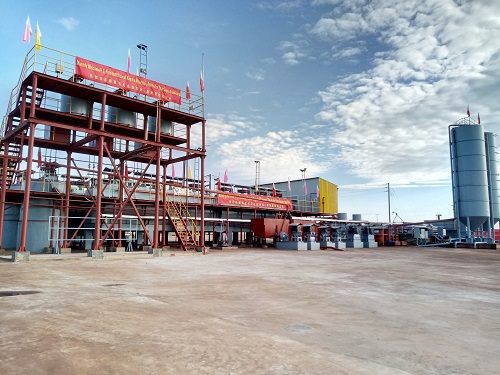
The ground bauxite is sent to Guangyida integrated flotation system for separation to obtain concentrate and tailings. Flotation is the process of separating valuable metals in bauxite from gangue using flotation agents. Guangyida integrated flotation system has the function of automatically adjusting the pulp concentration and flow rate, which can realize efficient flotation.

Concentrate Tailings Slurry Concentration

The resulting concentrate and tailings are concentrated to remove 80% of the water. The concentrated concentrate and tailings are filtered through a filter press to remove the remaining moisture to a moisture content of 13-18% for truck transportation.

Concentrate tailings dehydration

The concentrated concentrate and tailings are filtered through a filter press to remove the remaining moisture and make it 13-18% moisture for vehicle transportation. The water content of dehydrated bauxite is less than 10%, which can be conveniently loaded and transported.

water recovery

All the removed water is collected in the circulating pool for recycling, and the return water utilization rate is 100%.


In summary, the bauxite beneficiation process includes crushing and homogenization, pulp grinding, pulp flotation, concentrate tailings slurry concentration, concentrate tailings dehydration and other steps. Through these steps, valuable metals such as aluminum, silicon, iron, and copper can be extracted from bauxite and other impurities can be removed. During the beneficiation process, it is necessary to pay attention to controlling the particle size, controlling the concentration and flow rate of the pulp, and adjusting the reagents to ensure the quality and output of bauxite.


Thursday, March 16, 2023

How are impurities in quartz ore separated?

 In the beneficiation of quartz ore, the separation of different mineral components and quartz is an important issue, which has a great influence on the purity of quartz concentrate. Mineral components commonly found in quartz ore include mica, feldspar, iron-bearing minerals, and apatite. In this article we describe how the common mineral components of quartz are separated.


1. Separation of mica minerals from quartz

In quartz ore, after grinding and dissociation, the mica composed of layered structure exposes a large number of anions on the surface, which can be collected by cationic collectors in a wide range of pH values, although mica minerals and feldspar minerals collect The collection properties are similar, but the flotation pH range of mica is wider, so mica minerals can be flotation first under strong acidic conditions.

The reagent system for mica mineral flotation separation is relatively simple. Generally, the slurry concentration can be adjusted to between 30% and 35%. Dilute sulfuric acid is used for slurry adjustment, and amine cationic collectors are used to complete mica, feldspar, and quartz. Separation of minerals.

2. Separation of feldspar minerals from quartz

Quartz and feldspar are both framework silicate minerals, which are similar in nature and structure, and it is difficult to separate them. By using alkali metal ions to adjust the zero-electric point of feldspar, quartz can be effectively separated from feldspar.

Feldspar and quartz separation methods mainly include fluorine flotation and fluorine-free flotation. The fluorine flotation method refers to the preferential flotation of feldspar with cationic collectors under the condition of strong acidity and fluoride ion activation, and the key is to adjust the pH value of the pulp solution. The fluorine-free flotation method is that under strong acid conditions, the anion collector dodecylsulfonate and diamine cationic collector are mixed, and the anion collector is collected with the diamine adsorbed on the surface of feldspar. Agent complexation, the formation of co-adsorption, improve the surface hydrophobicity of feldspar.

3. Separation of iron-bearing minerals and quartz

There are many types of iron-containing minerals in quartz ore, including pyrite, ilmenite, hematite, and magnetite. It exists in various forms, some are attached to the surface of quartz in the form of iron oxide film, some exist in the form of mineral inclusions, and some exist in the interior of quartz lattice or other minerals in a diffuse state. In the process of separating iron-containing minerals and quartz, it is the key to determine the appropriate sorting process to find out the occurrence form of iron impurities and the distribution form in each particle size.

The commonly used method for separating iron minerals is strong magnetic separation, which can remove the iron minerals dissociated from the monomer after grinding. The scrubbing method can also remove the iron oxide film on the surface of the quartz particles. Pickling has a better effect on removing iron minerals. If the iron content requirement is relatively high, use pickling.

4. Separation of apatite mineral from quartz

Phosphorus in quartz ore generally exists in the form of apatite, which can be recovered by fatty acid soap anion collectors, such as sodium oleate, oxidized paraffin soap, tall oil, etc. Since fatty acid collectors have high environmental requirements on water quality and temperature, the hydrophobic surface can be enhanced by adding heavy oil, kerosene and other mineral oils to obtain better collection effects. In addition, modified flotation agents can also be used, which has a good effect on the separation of phosphorus minerals.

The above are the separation methods of the four common mineral components of quartz. In actual production, mineral components are more complex, and the selection of flotation reagents and flotation sequence are the key factors affecting the separation effect. It is necessary to analyze through the mineral processing test, formulate the process plan in a scientific and reasonable way, and avoid the economic benefits of the mineral processing plant from being affected.

Three methods of nickel ore flotation

 There are many minerals associated and associated with nickel ore. Whether mineral processing is required depends on the nickel content in the ore. Rich ore containing more than 3% nickel can be directly smelted; ore containing less than 3% nickel requires mineral processing.

Nickel ore flotation method

For ores with a nickel content of less than 3%, beneficiation is required. The commonly used beneficiation method is flotation. Magnetic separation and gravity separation are often used as auxiliary beneficiation methods for flotation in nickel ore beneficiation.

Collectors and foaming agents for flotation of copper sulfide minerals are often used in flotation of copper-nickel sulfide ores. A basic principle of determining the flotation process is to rather make copper enter the nickel concentrate, and avoid nickel entering the copper concentrate as much as possible. Because the nickel in the copper concentrate is lost in the smelting process, and the copper in the nickel concentrate can be recovered completely. There are mainly the following flotation methods.

1. Direct priority flotation or partial priority flotation

This process is used when the ore contains much more copper than nickel, allowing the copper to be separated into a separate concentrate. The advantage of this process is that copper concentrate with low nickel content can be obtained directly.


2. Mixed flotation method

It is used to select ores with lower copper content than nickel, and the resulting copper-nickel mixed concentrate is directly smelted into high-nickel matte. Mixed flotation of copper and nickel from the ore, and then separates low-nickel-containing copper concentrate and copper-containing ore from the mixed concentrate. nickel concentrate. After the nickel concentrate is smelted, high nickel matte is obtained, and then the high nickel matte is separated by flotation.

3. Mixed-priority flotation to recover part of nickel from mixed flotation tailings

When the floatability of various nickel minerals in the ore is very different, after copper-nickel mixed flotation, the nickel-containing minerals with poor floatability are further recovered from the tailings.

If you have any questions about nickel ore beneficiation, please contact online customer service or leave a message.

Monday, November 7, 2022

General beneficiation method of tin ore - gravity separation

 The density of cassiterite (SnO2) is 6800~7000 kg/m3, and it is often symbiotic with gangue minerals (such as quartz, feldspar, muscovite, etc.) with a density of about 3000 kg/m3.

180.jpg

Gravity beneficiation is the basic method of cassiterite separation. More than 85% of the world's tin concentrates come from gravity beneficiation operations. Gravity beneficiation can be used as cassiterite pre-enrichment means, and can also directly produce qualified cassiterite concentrate. In the Bronze Age, people began to use gravity beneficiation to enrich tin minerals. Since the 1960s, tin beneficiation has developed from a single gravity beneficiation to a combined process consisting of gravity beneficiation, flotation, magnetic separation, and electrical separation.

Grading desliming is a necessary preparation for the cassiterite gravity beneficiation process. The desliming equipment used mainly includes water guns, various washing machines, Bartley-Maudsley turning beds, cross-flow belt chutes and hydrocyclones. Medium concentrators and jigs mostly use dry coarse-grained and medium-grained cassiterite for pre-selection; screw concentrators use dry to effectively recover cassiterite with a particle size of 0.074~1 mm. The enrichment ratio of the shaker separation is high, which can not only select high-grade cassiterite concentrate, but also throw out the final tailings, which is the main equipment of the tin processing plant. Centrifugal concentrators are used to sort tin slime with a dry size of 0.037 mm.

Tin ore is divided into sand tin ore and vein tin ore. Sand tin ore is the main mining object, accounting for about 75% of the total mining volume. Sand tin ore generally adopts the gravity beneficiation process of stage grinding, stage separation, mud sand separation, and rich and poor separation. Vein tin ore has cassiterite-oxide mineral type, cassiterite-quartz type and cassiterite-sulfide mineral type.

181.jpg

The cassiterite-oxide mineral type mainly adopts a single gravity beneficiation process, mainly using a shaking table, and multi-grinding and multi-separation operations. Cassiterite-quartz type and cassiterite-sulfide mineral type are generally pre-selected by rich separation or heavy media separation, rough separation by jig and shaker, and finally by flotation, gravity beneficiation, magnetic separation, and electric separation. The process is selected to produce the final concentrate.

After the raw ore is ground to less than 1.5 mm in one stage, the middle 500 mm and middle 250 m hydrocyclones are used for two-stage classification, and the particles larger than 74 microns and 37~74 microns are still sorted and classified in a flat field shaker. After mixing with the secondary ore, Baiping uses a @125 high-meter hydraulic flow applicator to carry out late sludge, and discards the fine 19-micron or 1000-micron fine ore sludge with a very low tin content. Centrifugal concentrator, belt chute, shaker for sand settling.


Production of battery-grade lithium

 Lithium is currently produced from two main different deposit types: brine and hard rock. In mining brine deposits, brine, which is high in lithium, is pumped from below the surface. The lithium is concentrated by evaporation before the brine is sent to a processing facility for the production of lithium carbonate or lithium chloride. It can then be further processed to produce lithium hydroxide.

In hard rock operations, ore is typically extracted from pegmatite deposits using conventional mining techniques and then concentrated by crushing, heavy media separation and sometimes flotation to produce concentrates. The main lithium-bearing mineral in this ore is usually spodumene, so most of these mines produce spodumene concentrate as the final product.

194.jpg

Most of the world's battery-grade lithium is produced by:

Mining and acid leaching from i.e. LiAl(SiO3)2 produces a lithium sulfate solution, which is then electrochemically converted to battery-grade lithium carbonate or lithium hydroxide. Processed spodumene dominates production in Australia.

Lithium carbonate is concentrated and precipitated from brine by evaporation ponds. These resources tend to be of low hardness (eg, calcium, magnesium) and are located in areas with high evaporation rates, such as the high deserts of South America.

The third method, direct lithium extraction, is gaining popularity, especially in North America and China:

Direct lithium extraction involves adsorption of lithium from a brine source onto ion-exchange-type materials or beads, followed by release by washing the material with hydrochloric acid. Generates dilute lithium chloride containing impurities. We prefer to be suitable for lithium resources with higher hardness, in areas that are not suitable for evaporation ponds.

Friday, September 2, 2022

Magnetite separation method

 According to the different types of iron-bearing minerals, magnetite ore can be divided into single magnetite and mixed ore.

Generally, single magnetite ore is often separated by weak magnetic separation method, while polymetallic magnetite ore and mixed ore are mostly separated by a combined process composed of a variety of beneficiation methods, including magnetic separation method, flotation method, gravity separation method, and magnetization roasting. Magnetic separation method, reduction roasting magnetic separation method, etc.

41.jpg

1. Single magnetite beneficiation method

Most of the iron minerals in single magnetite are magnetite. Because single magnetite has simple composition, strong magnetism, easy grinding and easy selection, weak magnetic separation method is often used for separation.

◆ When the grinding particle size is greater than 0.2mm, most iron ore magnetic separation plants often use a one-stage grinding-magnetic separation process;

◆ When the grinding particle size is less than 0.2mm, a two-stage grinding-magnetic separation process is adopted;

◆ If qualified tailings are separated in the rough grinding stage, the magnetite magnetic separation plant should adopt the stage grinding-magnetic separation process;

◆ For dry and water-deficient areas, the magnetite processing plant can consider adopting the dry grinding-dry magnetic separation process;

◆ For the enriched magnetite-rich ore or magnetite-lean ore, generally, the gangue can be removed by the dry magnetic separation process first, and after the massive rich ore is obtained, the concentrate can be obtained through the grinding-magnetic separation process.

40.jpg

In order to obtain high-grade concentrates, the magnetite concentrates can be treated by methods such as reverse flotation or high-frequency fine sieves. In addition, in order to further improve the recovery rate, processes such as tailings reselection can also be considered to further recover magnetic minerals.

2. Method for beneficiation of polymetallic magnetite

The polymetallic magnetite gangue often contains silicate or carbonate minerals, associated cobalt pyrite, chalcopyrite and apatite, etc. Generally, the combined process of weak magnetic separation and flotation is used, that is, the use of weak magnetic separation The process recovers iron, and then sulfides or apatite, etc. are recovered through a flotation process.

Generally, the combined weak magnetic separation-flotation process of polymetallic magnetite ore can be divided into weak magnetic separation-flotation and flotation-weak magnetic separation. The difference lies in the conjoined body of magnetite and sulfide. Going different.

For the weak magnetic separation-flotation process, the conjoined bodies mainly enter the iron concentrate; for the flotation-weak magnetic separation process, the conjoined bodies mainly enter the sulfide concentrate. Therefore, under the same grinding particle size, iron concentrate with lower sulfide content and sulfide concentrate with higher recovery rate can be obtained from the process of flotation first and then magnetization.


Friday, August 26, 2022

【Technology】Gold mining process

 1. Mining

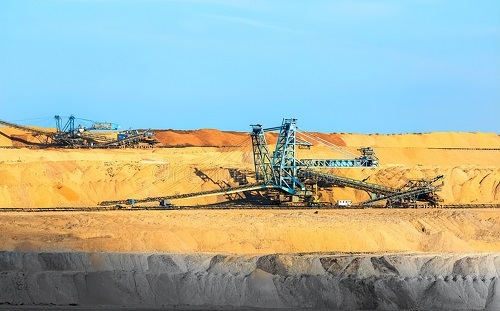
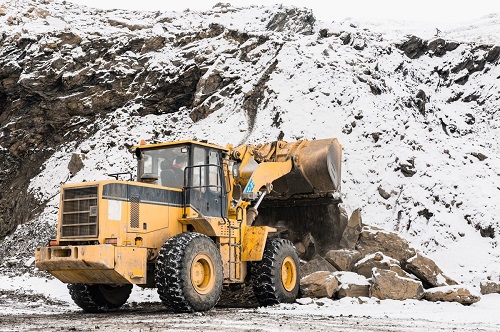
Mining is the extraction of economically valuable minerals or other substances from the ground, and all mining sites are mineral-rich deposits. Mining techniques are basically divided into two forms: open pit mining and underground mining. After exploration and feasibility studies are completed, ore is mined from the surface or underground using machinery such as excavators, drills, explosives and trucks.

10.jpg

2. Crushing mining process

The ore mined is very large. At present, the maximum ore particle size of open pit mines is 1000mm1500mm, and the maximum ore particle size of underground mines is 300mm600mm. Due to the close symbiosis of useful minerals and gangue minerals, such large ores cannot be directly separated. To separate them from each other, the ore must be crushed to a certain particle size before the next beneficiation operation.

11.jpg

3. Transportation during mining

Typically, belt conveyors are used to feed bulk ore to primary and secondary crushers, and then feed the crushed ore to vibrating screens to obtain different sizes.

12.jpg

4. Screening of the mining process

The screening process also plays a different role in the gold mining process.

Pre-screening: Before the ore enters a certain stage of the crusher, pre-screening the qualified products that meet the requirements. This process not only prevents the ore from being over-crushed, increases the productivity of the crusher, but also prevents the crusher from clogging.

Inspection and screening: After crushing, screening should be carried out to check the particle size of the crushed products, so that the unqualified extra-large ore particles can be sent back to the crushing operation to be crushed again.

5. Grinding during mining

Crushing is a continuation of the crushing process. Its purpose is to separate most of the useful mineral particles in the ore into monomers and classify them so that the particle size meets the requirements of the classification operation. In general, we support the principle of grinding more and grinding less to save costs.

6. Classification of mining processes

Classification: In the medium, substances are divided into different particle sizes according to different sedimentation rates.

The purpose of classification and screening is to separate the ore particles into different particle sizes, but their working principle and the particle size characteristics of the product are different.

The sieving should be strictly separated according to the sieving size;

Distinguish and classify materials according to the different settling velocities of materials in the medium.

In the grinding process, the qualified materials are usually separated in time by the method of classification, so as to avoid the excessive grinding of the ore and improve the grinding efficiency. Commonly used equipment are spiral classifiers and cyclones.

7. Gold mining process

The gold mining process mainly includes the following methods: cyanidation, flotation, gravity separation and mercury amalgamation.

8. Water treatment during mining

Coarse dewatering is relatively easy. Usually natural drainage is used, that is, natural drainage is drained by the gravity of the water itself. Dewatering of fines typically involves three operations: concentration, filtration and drying. Reclaimed water can be used for some parts of mineral processing operations, or it can be discharged after being treated to standards through a water treatment plant. 

9. Dry stacking of tailings

Concentrating hydrocyclone + high-efficiency deep cone thickener + high-efficiency multi-frequency dewatering screen, so that the final concentration can reach more than 85%, so as to achieve dry accumulation. The tailings are then used for paving, construction, etc.